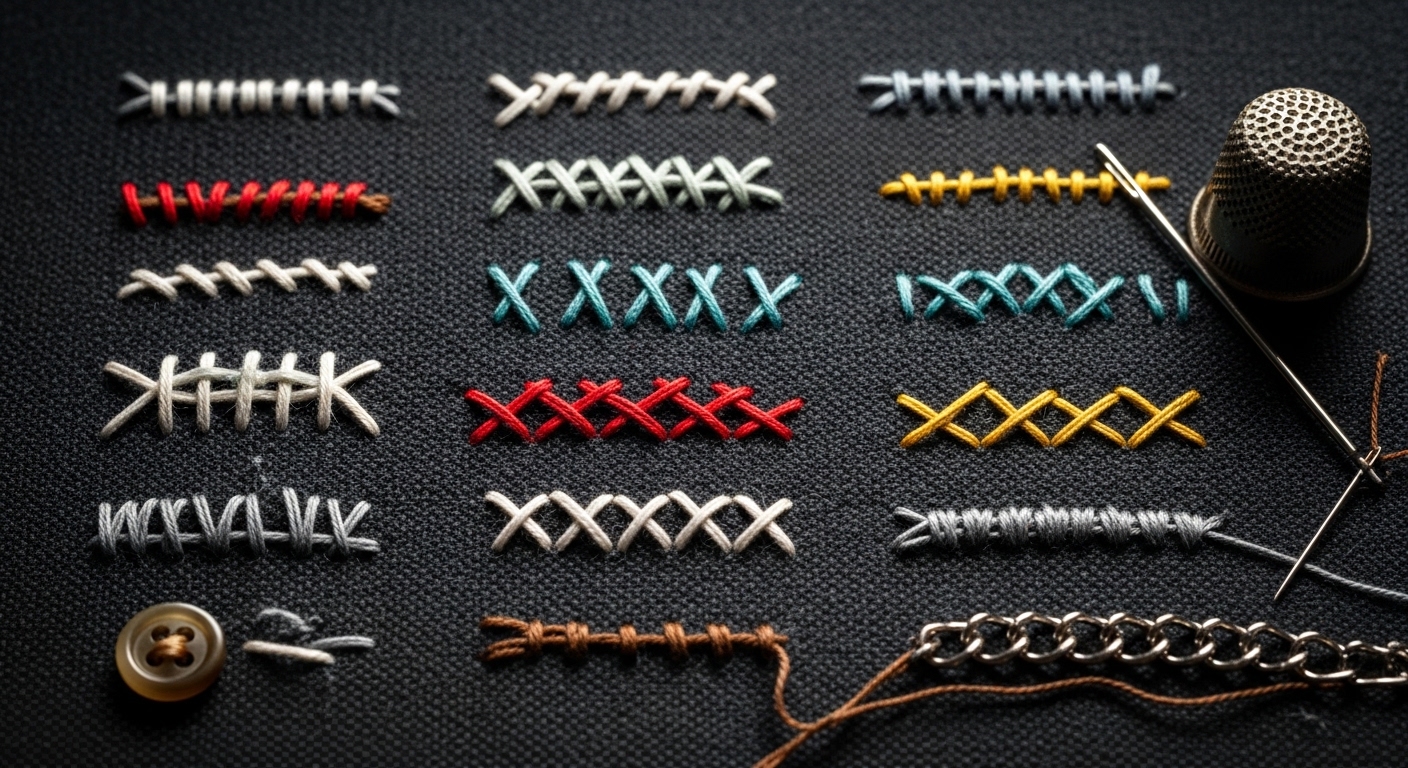
When people admire a finely tailored jacket, a healed surgical scar, or a beautifully restored piece of upholstery, they rarely think about the tiny, precise decisions that made the result possible. Yet behind every durable seam or successful closure lies a quiet discipline built on knowledge, judgment, and experience. That discipline is the world of nahttypen—the different types of stitches and suturing methods that determine whether something merely holds together or truly lasts.
From operating rooms to workshops and advanced manufacturing floors, nahttypen shape outcomes more than most people realize. They influence strength, flexibility, healing, aesthetics, and even long-term performance. Understanding them is not only useful for medical professionals or craftspeople; it also offers a broader lesson in how small structural choices can define big results.
Understanding Nahttypen in a Modern Context
At its core, the concept of nahttypen refers to the classification of stitching or suturing techniques based on how materials are joined. While the word has strong roots in medical and textile traditions, its relevance today spans healthcare, fashion, automotive interiors, and high-tech manufacturing. Each nahttyp is designed with a specific purpose in mind, responding to tension, movement, material thickness, and desired durability.
What makes nahttypen especially important is that there is no universal “best” option. A stitch that works perfectly in one context may fail completely in another. Choosing the right method requires understanding forces, environments, and outcomes rather than relying on habit or convenience.
Why the Choice of Nahttypen Matters More Than You Think
The difference between success and failure often lies not in the material itself but in how it is joined. In medical settings, the wrong nahttyp can slow healing or increase scarring. In textiles, it can lead to puckering or torn seams. In industrial products, it may cause premature wear or structural weakness.
Nahttypen matter because they distribute tension differently. Some are designed to absorb stress gradually, while others lock material firmly in place. Some allow flexibility and movement; others prioritize rigidity and precision. Selecting the right approach ensures that the seam works with the material rather than against it.
Common Categories of Nahttypen Explained
Although the variations are numerous, most nahttypen fall into recognizable categories based on function and structure. Continuous stitching methods are valued for speed and even tension distribution, making them common in long seams or closures. Interrupted methods, by contrast, offer greater control and security, since failure at one point does not compromise the entire seam.
There are also layered nahttypen designed to bring deeper structures together before closing the surface. These are especially important when strength and stability must be balanced with a clean external appearance. Across all categories, the guiding principle remains the same: form follows function.
Nahttypen Across Industries
What makes nahttypen fascinating is how the same underlying logic applies across very different fields. In medicine, sutures must support healing tissues while minimizing trauma. In fashion, stitches must combine durability with visual elegance. In manufacturing, seams must withstand repeated stress, vibration, or environmental exposure.
Despite these differences, professionals in each field face similar questions. How much tension will this seam experience? How much movement should it allow? What happens if part of it fails? The answers guide the choice of nahttypen, proving that this knowledge is as strategic as it is technical.
A Practical Comparison of Key Nahttypen
The table below highlights how different nahttypen are typically evaluated across practical dimensions. Rather than listing every variation, it focuses on the qualities professionals consider when making decisions.
| Nahttyp Characteristic | Primary Strength | Typical Use Case | Key Consideration |
|---|---|---|---|
| Continuous stitching | Speed and even tension | Long closures or seams | Risk of total failure if broken |
| Interrupted stitching | High security and control | Precision closures | Takes more time |
| Layered stitching | Structural stability | Deep or load-bearing joins | Requires technical skill |
| Decorative stitching | Visual appeal | Visible seams | Lower structural strength |
| Reinforced stitching | Maximum durability | High-stress areas | Less flexibility |
This comparison shows that nahttypen are less about preference and more about priorities. Each method solves a specific problem, and understanding those problems is the key to effective application.
The Role of Skill and Judgment in Using Nahttypen
Knowing the names and categories of nahttypen is only the beginning. True mastery comes from judgment—the ability to assess a situation and adapt technique accordingly. Experienced professionals adjust spacing, tension, and depth instinctively, often modifying standard approaches to suit real-world conditions.
This is why nahttypen are often taught through hands-on practice rather than theory alone. The feel of resistance, the visual alignment of edges, and the response of materials under stress all inform decisions that no manual can fully capture.
Innovation and the Future of Nahttypen
As materials evolve, so do nahttypen. Synthetic fabrics, bio-compatible threads, and smart textiles are pushing traditional stitching methods to adapt. In healthcare, absorbable and antimicrobial sutures are changing how closures are planned. In manufacturing, automation and robotics demand stitching methods that can be replicated with extreme precision.
Yet even with advanced technology, the fundamental logic of nahttypen remains unchanged. Every seam still represents a balance between strength, flexibility, efficiency, and appearance. Innovation builds on tradition rather than replacing it.
Learning from Nahttypen Beyond Technique
There is a broader lesson hidden in the study of nahttypen. They remind us that connections matter as much as components. Whether joining tissue, fabric, or ideas, the method of connection determines resilience. Strong systems are not just about high-quality parts but about thoughtful, well-designed links between them.
This perspective resonates far beyond stitching. Entrepreneurs, engineers, and designers alike can appreciate how small structural choices influence long-term outcomes. In that sense, nahttypen offer a quiet but powerful metaphor for sustainable design and decision-making.
Conclusion
Nahttypen rarely take center stage, yet they underpin results we rely on every day. They transform separate pieces into functional wholes and fragile edges into durable structures. By understanding their purpose and application, we gain insight into craftsmanship, engineering, and even problem-solving itself.
In a world increasingly focused on speed and surface-level results, nahttypen remind us that lasting quality comes from deliberate choices made at the smallest scale. Mastery lies not in doing more, but in connecting things the right way.